The Pressure Behind the Whistle: Supporting Referees’ Mental Health in Football

The Problem: Psychological Demands of Football Officiating
Referee mental health in football is an increasingly important issue within sport psychology and performance research. Football referees are required to perform under intense psychological pressure, making rapid and accurate decisions in high-stakes environments while facing criticism from players, coaches, and spectators. Alongside decision-making pressure, media coverage, and emotionally charged players and coaches, referees frequently experience verbal abuse, public criticism, and anxiety related to making errors, all of which can negatively impact confidence, concentration, and overall performance.
This blog explores the psychological demands of football refereeing. It focuses on stress, anxiety, burnout and the need for better mental health support. Using research and real-world examples, it highlights key challenges and practical solutions.
Evidence: What Does Research on Referee Mental Health Show?
Despite being essential to the game, referees often receive less attention than players in discussions around wellbeing and performance (Lindsay et al., 2025). As a result, concerns around referee mental health, emotional resilience, and organisational support in football officiating have become more prominent in recent research.
An increasing body of research highlights the significant psychological pressures experienced by sports officials. A recent systematic review on referee mental health found that officials commonly report elevated levels of anxiety, psychological distress, and burnout (Lindsay et al., 2025). These outcomes are closely linked to fear of making mistakes, pressure from spectators, and exposure to verbal abuse from players and coaches.
Importantly, while these stressors are similar to those experienced by elite athletes, referees continue to receive significantly less structured psychological support and attention. This suggests a clear gap between the demands of officiating and the level of mental health provision currently available, highlighting the need for more targeted support strategies within football officiating systems.
Organisational Response: Progress and Limitations
In response to growing awareness of referee mental health, organisations such as The Football Association have introduced guidance aimed at improving wellbeing within officiating.
FA mental health guidance emphasises key protective factors such as strong social support, emotional awareness, and access to appropriate mental health resources, alongside the principle of “spot the signs, support, and signpost.”
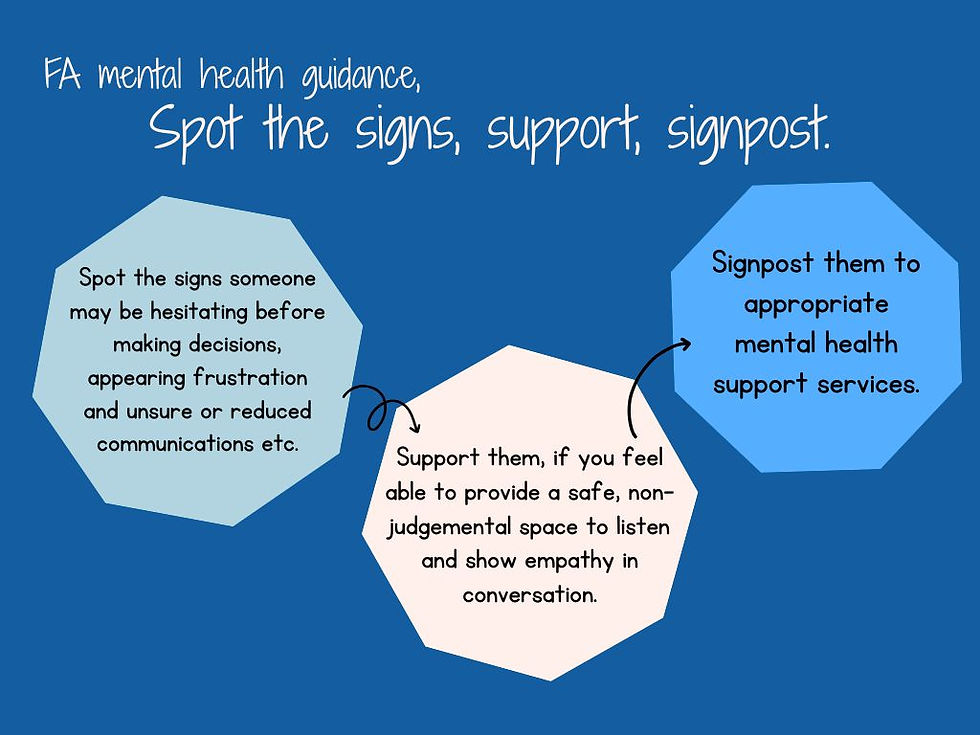
Developed in partnership with Mind and aligned with wider initiatives such as the Heads Up campaign, this approach encourages open conversations around mental health and aims to reduce stigma within football refereeing. However, despite these positive developments, psychological support for referees still appears less visible and less structured compared to that provided to players, particularly at grassroots level.
Case Study: When Pressure Extends Beyond the Pitch
A recent example that highlights the psychological pressure faced by referees is the 2023 UEFA Europa League Final 2023, officiated by Anthony Taylor.
During the match, several contentious decisions, including penalty appeals and disciplinary calls, led to significant frustration from players and coaching staff.
Following the final whistle, Roma manager José Mourinho publicly confronted the referee, resulting in a four-match UEFA ban for abusive conduct.
The situation escalated further when Taylor and his family were verbally abused by supporters at Budapest Airport while travelling home, with security required to escort them to safety after objects were reportedly thrown.
This incident demonstrates how the pressure experienced by referees can extend beyond the pitch, affecting not only their professional role but also their personal and family wellbeing.
It highlights the intensity of criticism, and potential abuse that referees face, reinforcing the urgent need for more visible and accessible psychological support systems within football.
Solutions: Improving Mental Health Support in Football Refereeing
To better support referee mental health and performance, a multi-level approach is required, combining mental skills training, structured support systems, and organisational change.
Mental Skills Training
Controlled breathing techniques (e.g. box breathing) to manage stress during high-pressure moments
Grounding strategies such as the 5-4-3-2-1 method to regain focus during emotionally intense situations
Positive self-talk and cue words (e.g. “next decision”, “stay composed”) to reduce overthinking after errors
Pre-performance routines to enhance consistency and reduce cognitive overload
Access to Mental Health Support Services
FA Mental Health Champions scheme providing peer support and signposting within officiating environments
External support from organisations such as Mind for counselling and wellbeing resources
24/7 confidential emotional support from Samaritans
Stronger Social and Peer Support Systems
Referee associations offering shared learning and peer support opportunities
Mentoring schemes pairing less experienced referees with senior officials
Buddy systems to reduce isolation, particularly for new referees
Structured post-match debriefs including emotional reflection, not only performance analysis
Organisational and Cultural Improvements
More visible mental health education embedded within referee training pathways
Regular wellbeing check-ins alongside performance evaluations
Clear reporting systems and stronger enforcement against abuse toward referees
Greater prioritisation of referee welfare within governing body frameworks
Conclusion
Referee mental health in football is an increasingly important area within sport psychology, with growing evidence highlighting the significant psychological demands placed on officials. Research consistently shows high levels of anxiety, stress, and burnout among referees, while real-world examples demonstrate that this pressure can extend beyond the pitch and into personal life.
Although organisations such as The Football Association have introduced important mental health initiatives, gaps in visibility, accessibility, and consistency of support remain. Moving forward, a combined approach involving psychological skills training, structured support systems, and stronger organisational commitment is essential to protect referee wellbeing and ensure the long-term sustainability of officiating in football.
Written by Andrew Yau, Year 2 physiotherapy Student at University Of Birmingham
Reference
Lindsay, R., Walton, C.C., Kittel, A., McNeil, D.G., Larkin, P., Spittle, M. and Cosh, S.M. (2025). The Mental Health of Sporting Officials: A Systematic Review and Meta-analysis. Sports Medicine. https://doi.org/10.1007/s40279-025-02315-1
The Football Association (2019). Heads Up. [online] www.thefa.com. Available at: https://www.thefa.com/about-football-association/heads-up.



Comments